
Condition
What Is Plantar Fasciitis?
Plantar fasciitis is one of the most common causes of pain underneath the heel.
The plantar fascia is a strong band of connective tissue running along the bottom of your foot from your heel towards your toes.
It plays an important role in supporting the foot and managing forces as you stand, walk and run.
When the plantar fascia becomes overloaded or irritated, pain can develop around its attachment at the heel.
For some people, symptoms settle relatively quickly.
For others, plantar heel pain can become persistent and begin to interfere with walking, work, exercise and everyday life.

Condition
What Does Plantar Fasciitis Feel Like?
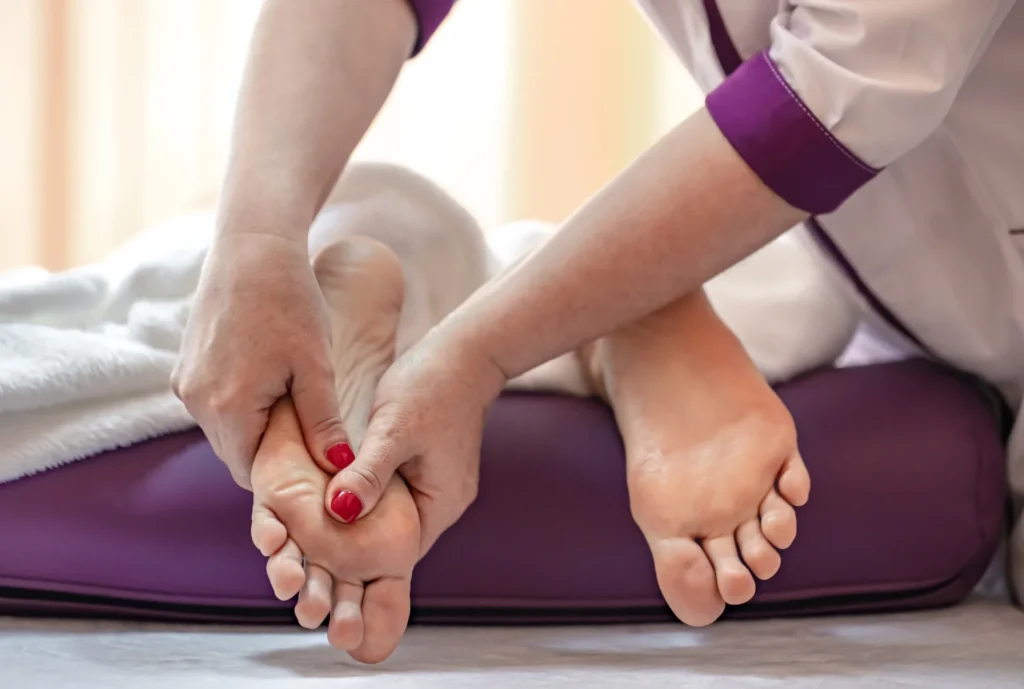
One of the most recognisable symptoms is pain underneath the heel when taking your first few steps after getting out of bed in the morning.
You may also experience:
- Pain underneath or around the heel
- Pain during your first steps in the morning
- Heel pain after sitting for a prolonged period
- Pain when standing for long periods
- Pain during or after walking
- Pain associated with running
- Tightness through the calf or Achilles region
- Discomfort through the arch of the foot
- Symptoms that improve once you get moving but return later
- Increasing heel pain after changes in exercise or activity
Plantar fasciitis can affect both active and less active people.
The important question isn’t simply “Where does it hurt?”
Condition
Looking Beyond the Heel
Gait Analysis & Advanced Foot Scanning
This is where our approach to plantar fasciitis is different.
The painful area is only one part of the assessment.
We also want to understand how your foot is functioning when you stand, walk and move.
At Swansea Chiropractic Clinic, we have access to specialist Gait & Motion foot-scanning technology that allows us to assess pressure distribution through the feet.
Your assessment can help us build a clearer picture of how forces are travelling through your foot and lower limb.
Depending on your presentation, we may consider:
- Foot pressure distribution
- Loading through the heel
- Left-to-right differences
- Foot and ankle movement
- Walking pattern
- Calf flexibility
- Ankle mobility
- Lower-limb strength
- Previous injuries
- Footwear
- Running or sporting activity
- Changes in training or activity levels
This information allows us to move away from a one-size-fits-all approach to plantar fasciitis.

Condition
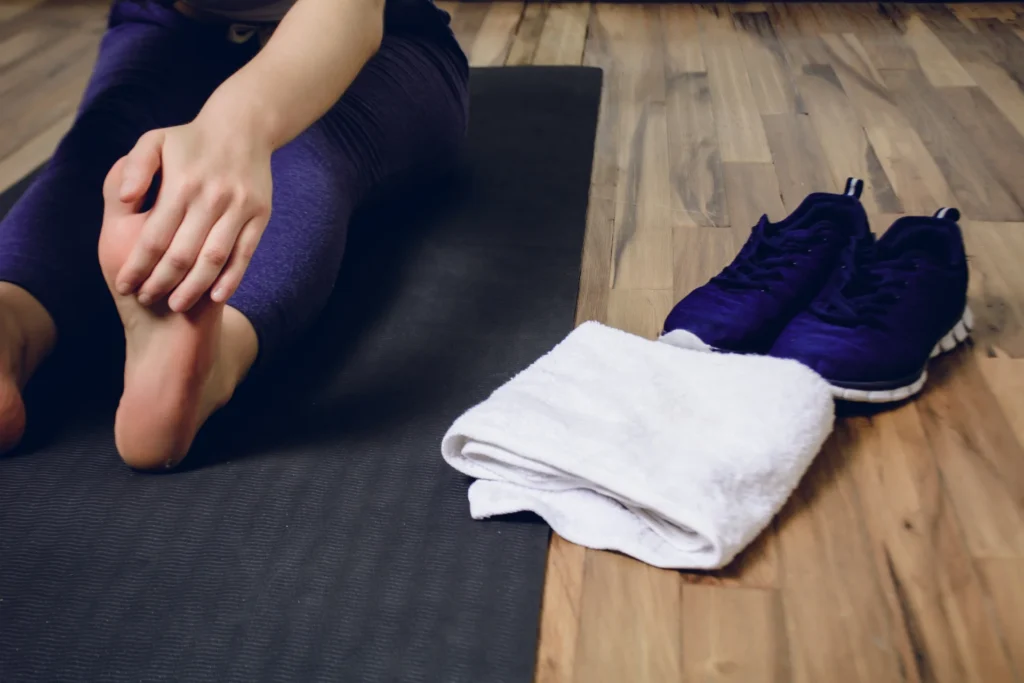
Why Has My Plantar Fasciitis Developed?
There isn’t always one simple cause.
Often, several factors contribute to increased load through the plantar fascia.
These may include:
- A sudden increase in walking or running
- Changes in training volume
- Prolonged standing
- Reduced ankle mobility
- Calf tightness
- Reduced foot or ankle strength
- Changes in foot mechanics
- Poorly suited footwear
- Changes in body weight
- Repetitive loading
- Returning to exercise after a period of inactivity
This is why assessment matters.
Simply treating the painful heel without considering the factors contributing to the problem may miss an important part of your recovery.
PERSONALISED TREATMENT
Four Key Parts of Our Plantar Fasciitis Approach
Your treatment plan is based on your individual assessment.
Depending on what we find, this may involve one or a combination of the following:
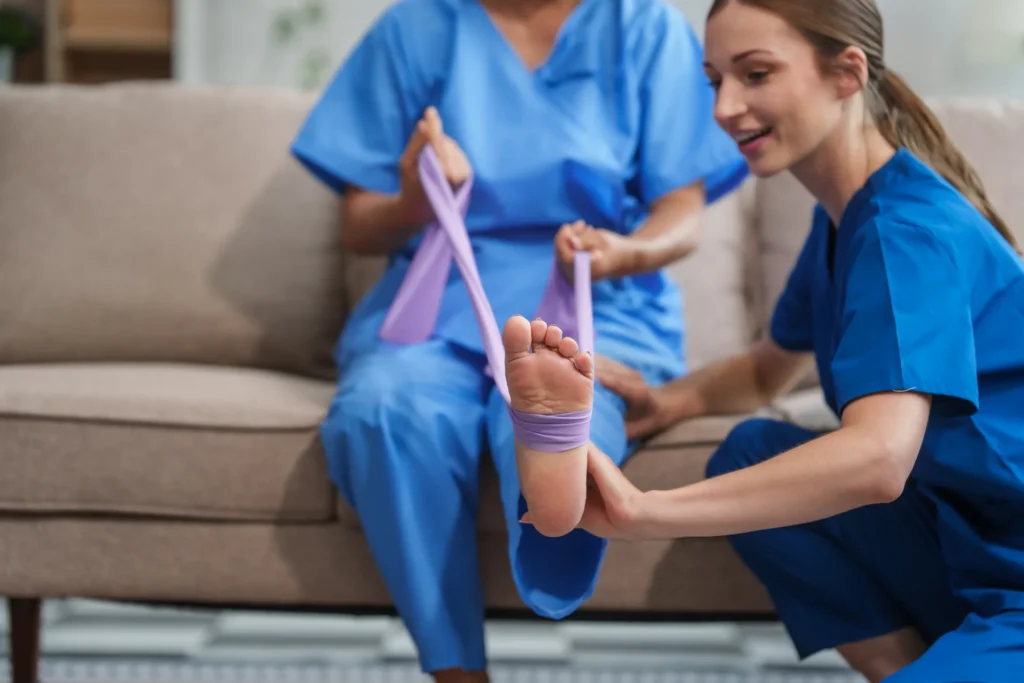
1. Specific Plantar Fasciitis Rehabilitation
Rehabilitation is an important part of our approach.
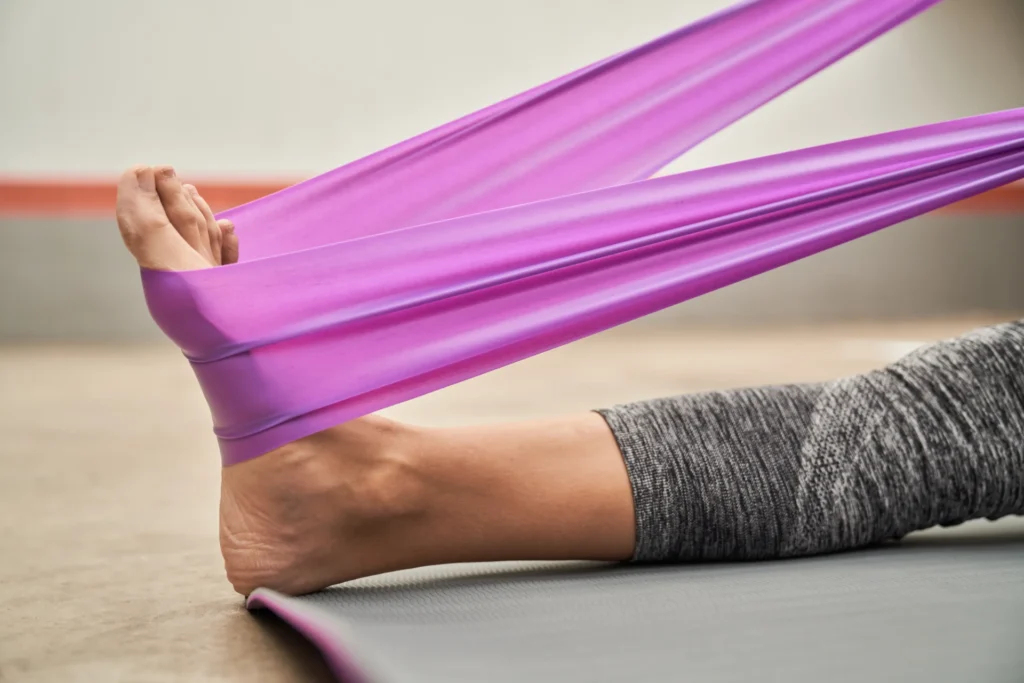
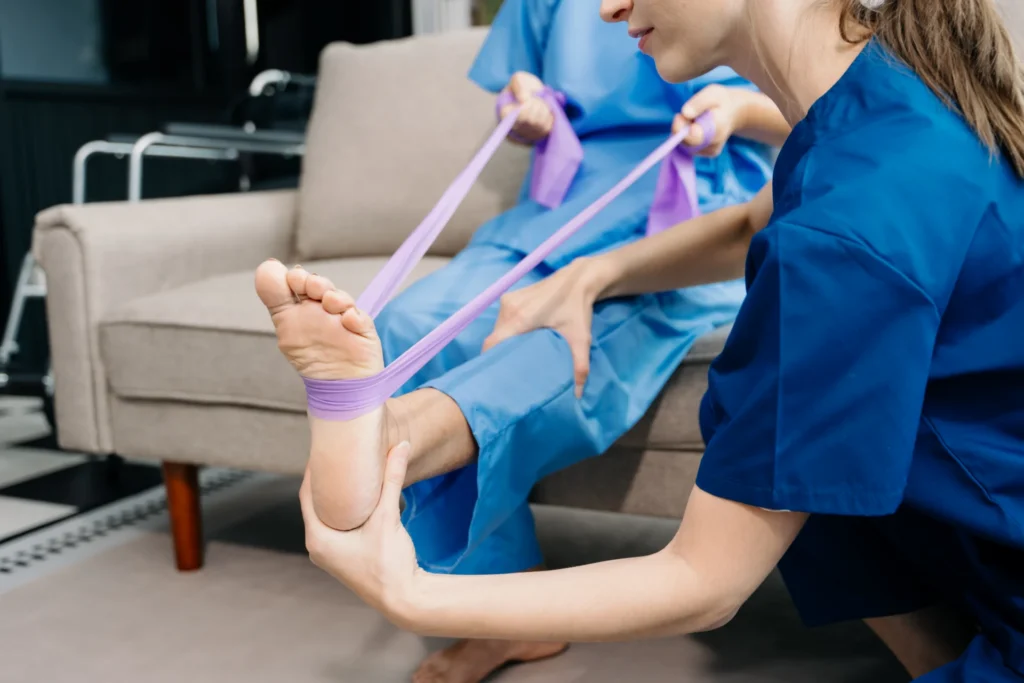
Rather than simply telling you to rest until the pain disappears, we want to help the foot and lower limb become better able to tolerate the demands you place on them.
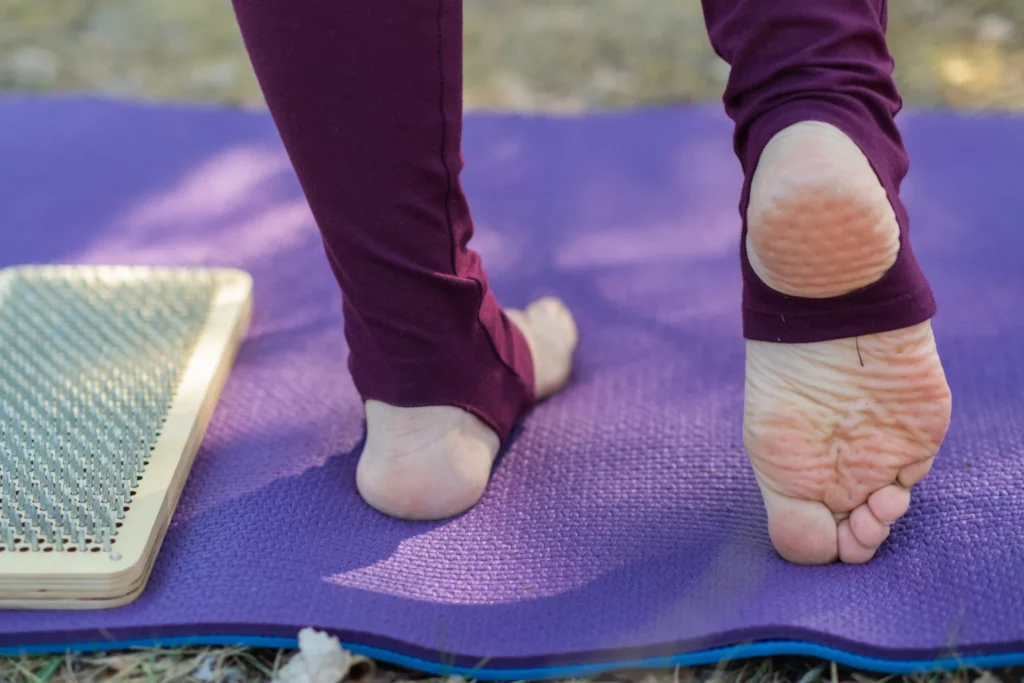
Your rehabilitation programme may include exercises targeting:
- Plantar fascia
- Calf and Achilles complex
- Foot and ankle strength
- Intrinsic foot muscles
- Ankle mobility
- Lower-limb strength
- Balance and control
- Gradual return to walking or running
Your programme is selected according to your assessment, current ability and goals.
A runner trying to return to training may require a very different rehabilitation programme to someone whose main goal is to walk comfortably at work.
2. Advanced Gait Analysis & Foot Scan
If we believe foot mechanics or loading patterns may be contributing to your symptoms, we can perform a more detailed gait and foot-pressure assessment.
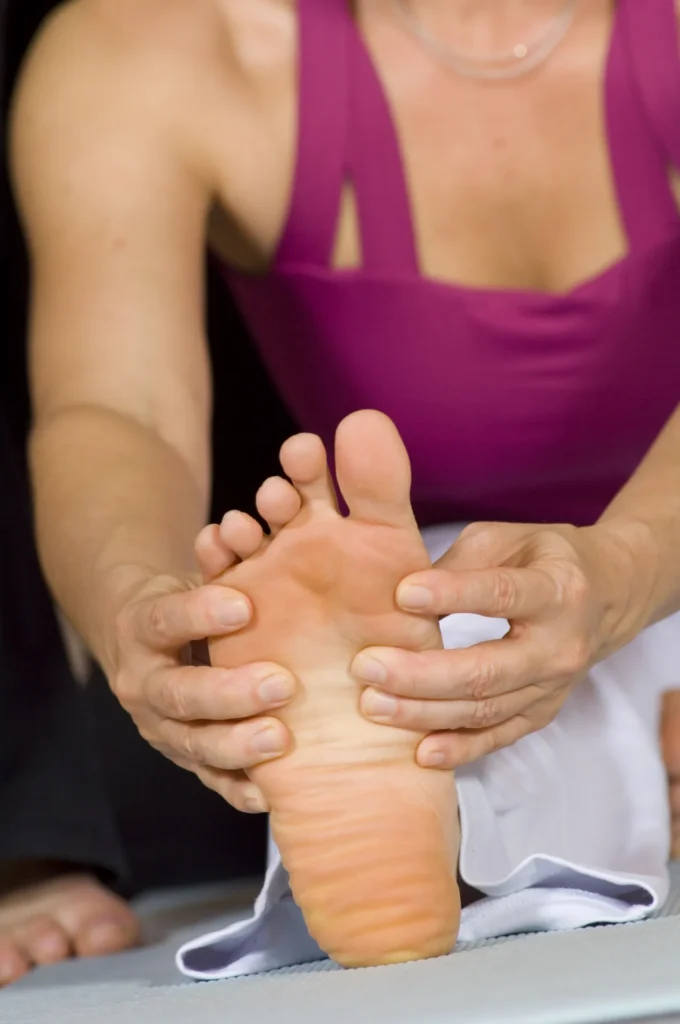
Our specialist foot-scanning technology allows us to analyse how pressure is distributed through your feet.
This can provide additional information when deciding whether changes to footwear, rehabilitation or additional support may be appropriate.
Importantly, not every patient with plantar fasciitis needs orthotics.
The purpose of the scan is to give us more information so we can make an individual recommendation.
3. Custom 3D-Printed Orthotics
Where your assessment indicates that additional foot support may be useful, we can prescribe custom orthotics as part of your overall management plan.
Using information from your assessment and foot scan, an individual orthotic prescription can be created.
Our clinic works with Phits 3D-printed orthotics, allowing us to provide customised foot orthoses according to the needs identified during your assessment.
Orthotics aren’t automatically prescribed to everyone with heel pain.
Instead, they are considered one part of a wider treatment strategy when appropriate.
Your plan may therefore combine orthotics with rehabilitation, activity modification and other treatments.
4. Shockwave Therapy
For persistent plantar fasciitis, extracorporeal shockwave therapy (ESWT) may be considered as part of your treatment plan.
Shockwave therapy uses acoustic pressure waves which are applied to the affected area using a specialist device.
It is non-surgical and does not involve injections.
Shockwave may be considered particularly when plantar fasciitis has become persistent or has not responded adequately to initial conservative management.
At Swansea Chiropractic Clinic, shockwave doesn’t have to be used in isolation.
Where appropriate, we can combine shockwave with:
Shockwave + Rehabilitation
Shockwave + Gait Assessment
Shockwave + Orthotics
or a combination of approaches depending on your individual presentation.
MULTIDISCIPLINARY APPROACH
More Than One Treatment Option
Plantar fasciitis isn’t the same for everybody.
That’s why we don’t believe every patient should automatically receive the same treatment.
One person may primarily require specific strengthening and rehabilitation.
Another may benefit from a gait assessment and changes to how their foot is being loaded.
Someone with persistent symptoms may be appropriate for shockwave therapy.
Another patient may benefit from orthotic support alongside rehabilitation.
And for some patients, the best approach may involve several of these.
Assessment first. Treatment second.
Our aim is to determine what is most appropriate for you.
Condition
Our Multidisciplinary Approach to Plantar Fasciitis
One of the major advantages of being assessed at Swansea Chiropractic Clinic is having multiple services available within the same clinic.
Rather than being limited to a single treatment technique, our team can draw upon:
- Gait and biomechanical assessment
- Advanced foot scanning
- Specific rehabilitation
- Custom orthotics
- Shockwave therapy
- Soft tissue therapy
- Dry needling where appropriate
- Chiropractic and musculoskeletal assessment
This allows us to look at the problem from different perspectives and create an individual management plan.
The technology isn’t the treatment plan.
It gives our clinicians more information and more options to help determine the most appropriate approach.
Condition
Plantar Fasciitis in Runners & Active People
Heel pain can be particularly frustrating when it prevents you from exercising.
Runners and active individuals may develop symptoms following changes in:
- Training volume
- Running distance
- Running frequency
- Training surface
- Footwear
- Strength training
- Recovery
- Overall activity levels
Simply stopping all activity isn’t necessarily the long-term answer.
We want to understand what your foot currently tolerates and what you’re asking it to tolerate.
From there, we can create a progressive rehabilitation and return-to-activity plan designed around you.
Where appropriate, gait analysis, foot scanning and orthotics can also form part of this process.
Condition
What Happens at Your Plantar Fasciitis Assessment?
Your appointment starts with understanding your problem.
We’ll discuss:
- Where your pain is located
- How long you’ve had symptoms
- When your pain is at its worst
- Your work and daily activities
- Exercise and sporting activities
- Running or walking volume
- Previous foot and ankle injuries
- Footwear
- Relevant medical history
- What you want to get back to doing
Your physical assessment may then look at areas such as:
- Foot and ankle movement
- Calf flexibility
- Strength
- Balance
- Lower-limb function
- Areas of tenderness
- Functional movements
- Walking mechanics
Where indicated, we can then use our advanced foot scan and gait analysis technology to gather additional information about how your feet are loading.
From there, we’ll explain what we’ve found and discuss the most appropriate management options.
Condition
Why Choose Swansea Chiropractic Clinic for Plantar Fasciitis?
-
Advanced Foot Scanning Technology
Our specialist Gait & Motion technology allows us to analyse foot-pressure and loading patterns as part of a detailed biomechanical assessment. -
Specific Rehabilitation
We can create an individual rehabilitation programme targeting the areas identified during your assessment. -
Custom 3D-Printed Orthotics
When indicated, we can prescribe Phits custom 3D-printed orthotics based on your individual assessment. -
Shockwave Therapy
Our clinic has specialist shockwave technology available for appropriate cases of persistent plantar fasciitis. -
Multiple Treatment Options Under One Roof
We're not restricted to offering one solution. Assessment, rehabilitation, gait analysis, orthotics, shockwave and soft tissue treatment can all be incorporated when appropriate. -
Multidisciplinary Expertise
Our multidisciplinary approach allows us to assess the wider picture and determine which combination of treatment and rehabilitation is most appropriate for you. -
Convenient Swansea Location
Visit our multidisciplinary clinic at Unit 11 Tower Court, St David's Road, Enterprise Park, Swansea SA6 8RU.
Condition
Stop Letting Heel Pain Dictate What You Can Do
Pain with your first steps every morning?
Struggling to walk comfortably?
Stopped running because of your heel?
Tried stretching but the pain keeps returning?
It’s time to look at the bigger picture.
At Swansea Chiropractic Clinic, we’ll assess your foot, movement, gait and individual circumstances before creating a treatment and rehabilitation plan built around you.
ASSESS. UNDERSTAND. TREAT. REHABILITATE.
FAQ's
Frequently Asked Questions
What is the best treatment for plantar fasciitis?
There isn’t one treatment that is appropriate for every person.
Management may include rehabilitation, stretching and strengthening, activity modification, orthotics and, in persistent cases, shockwave therapy.
At Swansea Chiropractic Clinic, we assess you first before recommending the most appropriate treatment or combination of treatments.
Do you offer plantar fasciitis treatment in Swansea?
Yes. Swansea Chiropractic Clinic provides assessment and management of plantar fasciitis from our multidisciplinary clinic at Unit 11 Tower Court, St David’s Road, Enterprise Park, Swansea SA6 8RU.
Can you scan my feet?
Yes. We use specialist Gait & Motion foot-scanning technology to assess pressure and loading through the feet where appropriate.
This information can be combined with your physical and biomechanical assessment.
Do I need orthotics for plantar fasciitis?
Not necessarily.
We don’t believe every person with plantar fasciitis automatically needs orthotics.
Your assessment and foot scan can help us determine whether additional support may be appropriate as part of your wider management plan.
Can orthotics help plantar fasciitis?
Foot orthoses may help reduce pain for some people with plantar fasciitis, but they are generally better considered as part of a broader treatment programme rather than the only treatment.
Where appropriate, we can combine orthotics with specific rehabilitation and other management strategies.
Do you provide custom orthotics in Swansea?
Yes. Where clinically appropriate, Swansea Chiropractic Clinic can provide Phits custom 3D-printed orthotics following assessment and foot scanning.
Does shockwave therapy help plantar fasciitis?
Shockwave therapy is used for persistent or refractory plantar fasciitis.
Whether it is appropriate depends on factors such as how long you’ve had symptoms, previous treatment and the findings of your assessment.
We’ll discuss the potential benefits, limitations and alternatives before recommending treatment.
How long does plantar fasciitis take to improve?
Recovery varies considerably between individuals and depends on factors including how long symptoms have been present, activity levels and contributing factors.
Your treatment and rehabilitation plan will be tailored to your individual presentation rather than promising a specific recovery time.
Can I continue running with plantar fasciitis?
That depends on the severity of your symptoms and how your foot responds to load.
For runners, our aim is to assess the factors contributing to the problem and develop an appropriate rehabilitation and gradual return-to-running strategy rather than simply providing generic advice.
Where can I get gait analysis for plantar fasciitis in Swansea?
Swansea Chiropractic Clinic provides gait analysis, advanced foot scanning, rehabilitation, custom orthotics and shockwave therapy as part of our multidisciplinary approach to plantar fasciitis and heel pain.